

A missing tooth is never just a cosmetic problem. It changes how you chew, how your bite lines up, and over time, how the bone underneath that gap holds up. Whether you’re missing one tooth from an injury or extraction, or several teeth after years of wear, dental implants for missing teeth have become the option most dentists recommend first, and understanding why makes it a lot easier to decide if they’re right for you.
What Are Dental Implants for Missing Teeth?
According to Cleveland Clinic, a dental implant is a small titanium post that’s surgically placed into the jawbone, where it acts as an artificial tooth root. Once it fuses with the bone, a connector piece called an abutment attaches a custom crown, bridge, or denture on top, depending on how many teeth are being replaced. That fusion process, called osseointegration, is what makes implants function and feel like natural teeth rather than something removable.
According to the American Dental Association’s MouthHealthy resource, getting a dental implant typically happens in three phases:
- Placement: The dentist positions the titanium implant post in the jawbone during a short surgical procedure.
- Healing: The bone grows around the post through osseointegration, a process that can take several months.
- Restoration: A custom crown, bridge, or denture is attached to complete the smile.
WebMD notes that implants have success rates in the 90 to 95 percent range for people in reasonably good health, and that they’re generally favored over dentures for their durability and how closely they replicate the function of a natural tooth.
Replacing a Single Missing Tooth
When just one tooth is missing, a single dental implant replaces both the root and the visible tooth without altering the healthy teeth on either side, which is one of the biggest advantages implants have over a traditional bridge. A bridge requires grinding down the neighboring teeth to anchor a false tooth in between; a single implant stands on its own. For patients who’ve lost a tooth to injury, decay, or a failed root canal, this is often the most conservative long-term option available.
Replacing Multiple Missing Teeth
Losing more than one tooth, especially in the same area of the mouth, opens up a few different paths. In some cases, two or more individual implants can each support their own crown. In others, a smaller number of implants can support an implant-retained bridge that spans several missing teeth at once, which means fewer surgical sites while still restoring full chewing function across that section of the mouth.
For patients missing most or all of the teeth in an arch, options like full-arch implant solutions use as few as four to six implants to support an entire row of replacement teeth, often with same-day temporary restorations while the permanent version is being finalized.
Why Implants Tend to Outlast Other Options
Dentures and bridges replace the visible part of a missing tooth, but neither one addresses what happens to the jawbone underneath. Bone in that area is stimulated by the pressure of chewing, and once a tooth root is gone, that stimulation stops, which is part of why jaws can gradually change shape after long-term tooth loss. Implants are the only replacement option that restores that root-level stimulation, which is a big part of why they’re associated with better long-term bone health compared to a removable denture resting on the gums.
That doesn’t mean implants are the right fit for everyone right away. Patients with significant bone loss, untreated gum disease, or certain uncontrolled health conditions may need additional treatment, like bone grafting, before an implant can be placed successfully. This is exactly why a proper evaluation matters more than assuming any one option is automatically the best choice.
What to Expect at St. Louis County Dental
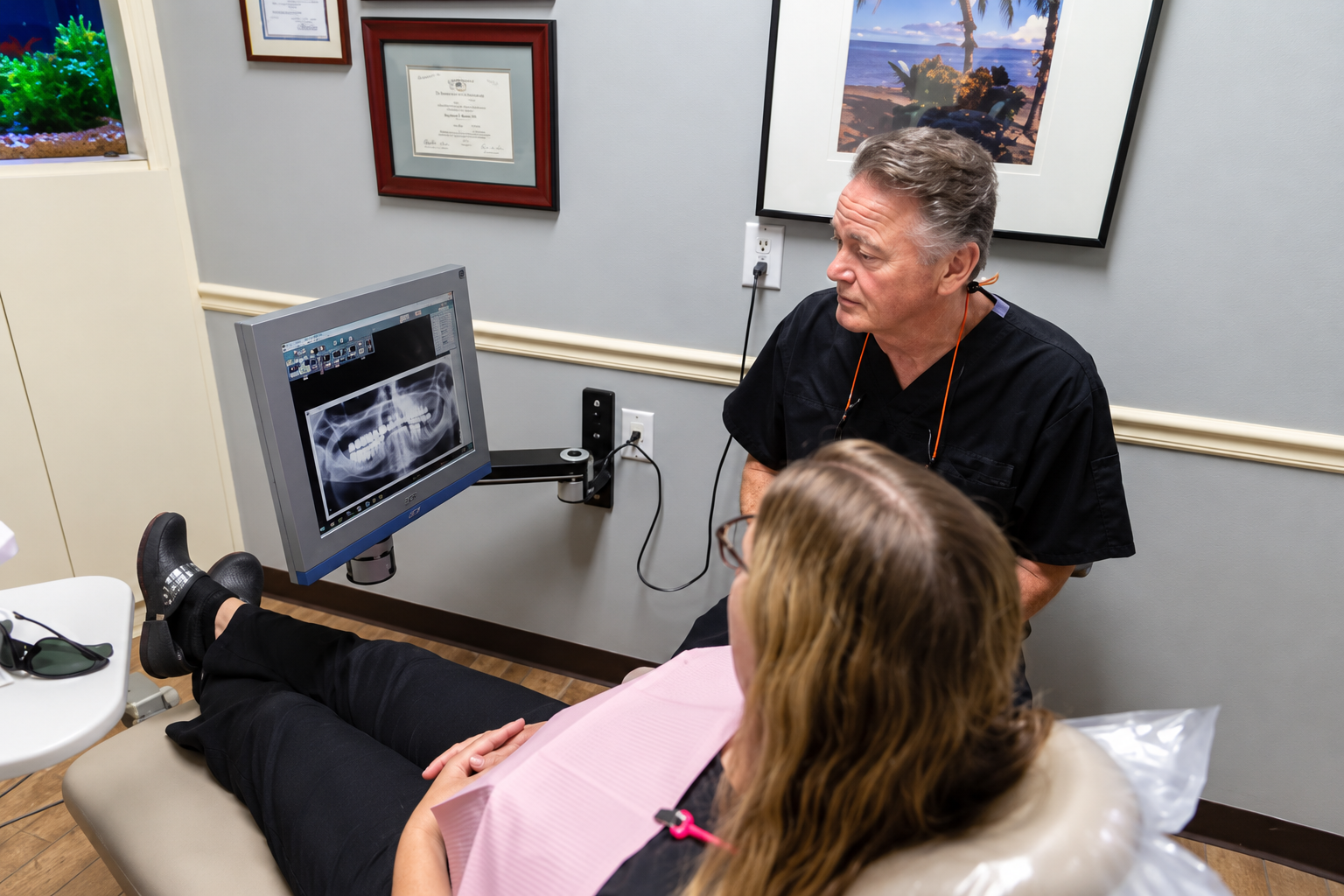
Every patient who comes in asking about missing teeth gets a full evaluation of their bone structure, bite, and overall oral health before any treatment plan is discussed, whether that ends up being a single implant, a multi-tooth solution, or a full-arch option. With decades of combined implant experience on staff, the goal is matching the treatment to what a patient’s mouth actually needs rather than defaulting to whatever’s easiest to schedule.
Cost and financing questions come up in almost every consultation, and that’s a normal part of the conversation. Straightforward answers about what’s involved, and what it costs, are a big part of removing the guesswork from a decision this significant.
Ready to Talk Through Your Options?
If you’re missing one tooth or several, the right next step is a real evaluation, not a guess based on what worked for someone else. Schedule a consultation with St. Louis County Dental to find out which tooth replacement option actually fits your mouth, your timeline, and your budget.
Frequently Asked Questions
How many teeth can a single dental implant replace?
One implant typically supports one crown, replacing one missing tooth. When several teeth are missing, a smaller number of implants can support a bridge or a full-arch restoration that replaces multiple teeth at once.
Are dental implants better than a bridge or denture?
Implants are generally considered the more durable, longer-lasting option because they replace the tooth root and preserve jawbone density, something bridges and traditional dentures don’t do. The right choice still depends on a patient’s individual bone health, budget, and treatment goals.
What if I’ve been missing a tooth for years?
Long-term tooth loss often comes with some bone loss in that area, but that doesn’t rule out implants. It may mean a bone graft is needed first to build up enough bone to support the implant, which your dentist can evaluate during a consultation.
How long does the dental implant process take?
Because the implant needs time to fuse with the jawbone before the permanent crown or bridge is attached, the full process commonly spans a few months from placement to final restoration, though some cases allow for a same-day temporary tooth in the meantime.